
Sunday, July 22, 2012

Tuesday, June 26, 2012
Christians, Jews Gather for 'Corrie Remembers'

While largely unfamiliar to most Jews, Corrie ten Boom is a well-known hero among believing Christians, a model of how Christians should act in dark times. Her private story of faith and heroism was depicted in the play "Corrie Remembers", staged last Sunday to a wide audience of Christians and Jews from all over northern Israel.
The one-woman show highlights the memories of Corrie ten Boom, one of the "Righteous among the Nations." Corrie's story remains little-known to Jews. However, the City of Afula and the Galilee Center for Studies in Jewish-Christian Relations at Yezreel Valley College worked to change that by bringing this drama to Israel.
Cornelia (Corrie) was raised in Holland, in a family of dedicated Christians who believed that the Jews were a people chosen by God. With the German invasion of Holland in 1940, the ten Boom's beliefs about Jews were put to the test. Asserting that God's people were always welcome in their house in Haarlem, they courageously made their home above their father's watch repair shop into a place for Jews and resistance members to hide, before being moved to safe houses in the country. One of the first Jews to stay there on a long-term basis was Meyer Mossel, a cantor from an Amsterdam synagogue.
A secret room was built in Corrie's bedroom where the Jews could hide in case the house was raided. The room was the size of a closet, built with a false wall and an air vent to the outside. When the house was indeed raided by the Gestapo in February of 1944, six people escaped detection by hiding in that tiny room. The ten Boom family and many of their friends were arrested that day. Most were eventually released, but Corrie's father remained in prison, where he died. Corrie and her sister Bessie were sent to Ravensbrück for their efforts, the notorious concentration camp for women near Berlin. Bessie died there, and Corrie was ultimately released due to a clerical error at the end of 1944.
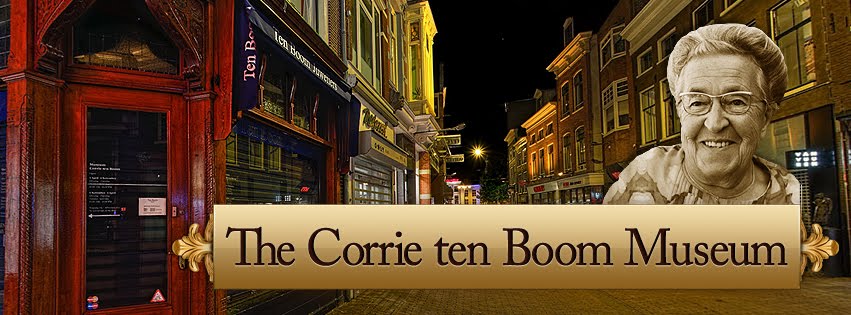
Despite the cruelty that she endured, her faith remained resolute. Corrie would eventually dedicate herself to spreading the message of forgiveness and reconciliation she believed in. After the war she began a public speaking campaign all over the world. Corrie Ten Boom was honored by Yad Vashem as one of the Righteous Among the Nations in 1967 and was knighted by the Queen of the Netherlands in 1968. She passed away on her birthday in 1983 at the age of 91. Soon after her death, the ten Boom house in Haarlem was restored and opened as a museum in her honor.
"Corrie Remembers" is a powerful one-woman dramatization that has been performed hundreds of times around the globe. Susan Sandager portrays Corrie Ten Boom in the eighth decade of her life, remembering her younger years. Jews and Christians of all ages came to the show from Afula, Jerusalem, Karmiel, Nazareth and neighboring kibbutzim and small communities, all of whom were encouraged by the simple courage and love that Corrie ten Boom embodied.
After the show one woman said, "I thoroughly enjoyed Corrie Remembers... I vaguely knew the story, but the play brought it alive so well. I cried almost the whole way through. I left wondering if I had lived then, would I have found the courage to help Jews rather than 'mind my own business' as I do so often in today's conflicted times....Susie Sandager's portrayal of an old Dutch lady was amazing! Her message of support for Israel at the end of the evening was very powerful. Would that all our co-religionists in the Diaspora were as passionate in their support of Israel as this Christian woman."
Source: JPost
Corrie ten Boom
Corrie ten Boom has long been honored by evangelical Christians
as an exemplar of Christian faith in action. Arrested by the Nazis
along with the rest of her family for hiding Jews in their Haarlem
home during the Holocaust, she was imprisoned and eventually sent to
the Ravensbruck concentration camp along with her beloved sister,
Betsie, who perished there just days before Corrie's own release on
December 31, 1944. Inspired by Betsie's example of selfless love and
forgiveness amid extreme cruelty and persecution, Corrie established a
post-war home for other camp survivors trying to recover from the
horrors they had escaped. She went on to travel widely as a
missionary, preaching God's forgiveness and the need for
reconciliation. Corrie's devout moral principles were tested when, by
chance, she came face to face with one of her former tormentors in
1947. The following description of that experience is excerpted from
her 1971 autobiography, The Hiding Place, written with the help of John and Elizabeth Sherrill.
It was in a church in Munich that I saw him, a balding heavy-set man in a gray overcoat, a brown felt hat clutched between his hands. People were filing out of the basement room where I had just spoken. It was 1947 and I had come from Holland to defeated Germany with the message that God forgives. ...
And that's when I saw him, working his way forward against the others. One moment I saw the overcoat and the brown hat; the next, a blue uniform and a visored cap with its skull and crossbones. It came back with a rush: the huge room with its harsh overhead lights, the pathetic pile of dresses and shoes in the center of the floor, the shame of walking naked past this man. I could see my sister's frail form ahead of me, ribs sharp beneath the parchment skin. Betsie, how thin you were!
Betsie and I had been arrested for concealing Jews in our home during the Nazi occupation of Holland; this man had been a guard at Ravensbruck concentration camp where we were sent. ...
"You mentioned Ravensbruck in your talk," he was saying. "I was a guard in there." No, he did not remember me.
I'm Still Learning to Forgive
It was in a church in Munich that I saw him, a balding heavy-set man in a gray overcoat, a brown felt hat clutched between his hands. People were filing out of the basement room where I had just spoken. It was 1947 and I had come from Holland to defeated Germany with the message that God forgives. ...
And that's when I saw him, working his way forward against the others. One moment I saw the overcoat and the brown hat; the next, a blue uniform and a visored cap with its skull and crossbones. It came back with a rush: the huge room with its harsh overhead lights, the pathetic pile of dresses and shoes in the center of the floor, the shame of walking naked past this man. I could see my sister's frail form ahead of me, ribs sharp beneath the parchment skin. Betsie, how thin you were!
Betsie and I had been arrested for concealing Jews in our home during the Nazi occupation of Holland; this man had been a guard at Ravensbruck concentration camp where we were sent. ...
"You mentioned Ravensbruck in your talk," he was saying. "I was a guard in there." No, he did not remember me.
"I had to do it — I knew that. The message that God forgives has a prior condition: that we forgive those who have injured us."
"But since that time," he went on, "I have become a Christian.
I know that God has forgiven me for the cruel things I did there, but
I would like to hear it from your lips as well. Fraulein, ..." his hand came out, ... "will you forgive me?"And I stood there — I whose sins had every day to be forgiven — and could not. Betsie had died in that place — could he erase her slow terrible death simply for the asking?
It could not have been many seconds that he stood there, hand held out, but to me it seemed hours as I wrestled with the most difficult thing I had ever had to do.
For I had to do it — I knew that. The message that God forgives has a prior condition: that we forgive those who have injured us. "If you do not forgive men their trespasses," Jesus says, "neither will your Father in heaven forgive your trespasses." ...
And still I stood there with the coldness clutching my heart. But forgiveness is not an emotion — I knew that too. Forgiveness is an act of the will, and the will can function regardless of the temperature of the heart. "Jesus, help me!" I prayed silently. "I can lift my hand, I can do that much. You supply the feeling."
And so woodenly, mechanically, I thrust my hand into the one stretched out to me. And as I did, an incredible thing took place. The current started in my shoulder, raced down my arm, sprang into our joined hands. And then this healing warmth seemed to flood my whole being, bringing tears to my eyes.
"I forgive you, brother!" I cried. "With all my heart!"
For a long moment we grasped each other's hands, the former guard and the former prisoner. I had never known God's love so intensely as I did then.
Source: PBS- Public Broadcasting Service
Corrie Ten Boom Story on Forgiving
“It was in a church in Munich that I saw him—a balding, heavyset man
in a gray overcoat, a brown felt hat clutched between his hands. People
were filing out of the basement room where I had just spoken, moving
along the rows of wooden chairs to the door at the rear. It was 1947 and
I had come from Holland to defeated Germany with the message that God
forgives.
“It was the truth they needed most to hear in that bitter, bombed-out land, and I gave them my favorite mental picture. Maybe because the sea is never far from a Hollander’s mind, I liked to think that that’s where forgiven sins were thrown. ‘When we confess our sins,’ I said, ‘God casts them into the deepest ocean, gone forever. …’
“The solemn faces stared back at me, not quite daring to believe. There were never questions after a talk in Germany in 1947. People stood up in silence, in silence collected their wraps, in silence left the room.
“And that’s when I saw him, working his way forward against the others. One moment I saw the overcoat and the brown hat; the next, a blue uniform and a visored cap with its skull and crossbones. It came back with a rush: the huge room with its harsh overhead lights; the pathetic pile of dresses and shoes in the center of the floor; the shame of walking naked past this man. I could see my sister’s frail form ahead of me, ribs sharp beneath the parchment skin. Betsie, how thin you were!
[Betsie and I had been arrested for concealing Jews in our home during the Nazi occupation of Holland; this man had been a guard at Ravensbruck concentration camp where we were sent.]
“Now he was in front of me, hand thrust out: ‘A fine message, Fräulein! How good it is to know that, as you say, all our sins are at the bottom of the sea!’
“And I, who had spoken so glibly of forgiveness, fumbled in my pocketbook rather than take that hand. He would not remember me, of course—how could he remember one prisoner among those thousands of women?
“But I remembered him and the leather crop swinging from his belt. I was face-to-face with one of my captors and my blood seemed to freeze.
“ ‘You mentioned Ravensbruck in your talk,’ he was saying, ‘I was a guard there.’ No, he did not remember me.
“ ‘But since that time,’ he went on, ‘I have become a Christian. I know that God has forgiven me for the cruel things I did there, but I would like to hear it from your lips as well. Fräulein,’ again the hand came out—’will you forgive me?’
“And I stood there—I whose sins had again and again to be forgiven—and could not forgive. Betsie had died in that place—could he erase her slow terrible death simply for the asking?
“It could not have been many seconds that he stood there—hand held out—but to me it seemed hours as I wrestled with the most difficult thing I had ever had to do.
“For I had to do it—I knew that. The message that God forgives has a prior condition: that we forgive those who have injured us. ‘If you do not forgive men their trespasses,’ Jesus says, ‘neither will your Father in heaven forgive your trespasses.’
“I knew it not only as a commandment of God, but as a daily experience. Since the end of the war I had had a home in Holland for victims of Nazi brutality. Those who were able to forgive their former enemies were able also to return to the outside world and rebuild their lives, no matter what the physical scars. Those who nursed their bitterness remained invalids. It was as simple and as horrible as that.
“And still I stood there with the coldness clutching my heart. But forgiveness is not an emotion—I knew that too. Forgiveness is an act of the will, and the will can function regardless of the temperature of the heart. ‘… Help!’ I prayed silently. ‘I can lift my hand. I can do that much. You supply the feeling.’
“And so woodenly, mechanically, I thrust my hand into the one stretched out to me. And as I did, an incredible thing took place. The current started in my shoulder, raced down my arm, sprang into our joined hands. And then this healing warmth seemed to flood my whole being, bringing tears to my eyes.
“ ‘I forgive you, brother!’ I cried. ‘With all my heart!’
“For a long moment we grasped each other’s hands, the former guard and the former prisoner. I had never known God’s love so intensely, as I did then”
Source: Family Life Education
“It was the truth they needed most to hear in that bitter, bombed-out land, and I gave them my favorite mental picture. Maybe because the sea is never far from a Hollander’s mind, I liked to think that that’s where forgiven sins were thrown. ‘When we confess our sins,’ I said, ‘God casts them into the deepest ocean, gone forever. …’
“The solemn faces stared back at me, not quite daring to believe. There were never questions after a talk in Germany in 1947. People stood up in silence, in silence collected their wraps, in silence left the room.
“And that’s when I saw him, working his way forward against the others. One moment I saw the overcoat and the brown hat; the next, a blue uniform and a visored cap with its skull and crossbones. It came back with a rush: the huge room with its harsh overhead lights; the pathetic pile of dresses and shoes in the center of the floor; the shame of walking naked past this man. I could see my sister’s frail form ahead of me, ribs sharp beneath the parchment skin. Betsie, how thin you were!
[Betsie and I had been arrested for concealing Jews in our home during the Nazi occupation of Holland; this man had been a guard at Ravensbruck concentration camp where we were sent.]
“Now he was in front of me, hand thrust out: ‘A fine message, Fräulein! How good it is to know that, as you say, all our sins are at the bottom of the sea!’
“And I, who had spoken so glibly of forgiveness, fumbled in my pocketbook rather than take that hand. He would not remember me, of course—how could he remember one prisoner among those thousands of women?
“But I remembered him and the leather crop swinging from his belt. I was face-to-face with one of my captors and my blood seemed to freeze.
“ ‘You mentioned Ravensbruck in your talk,’ he was saying, ‘I was a guard there.’ No, he did not remember me.
“ ‘But since that time,’ he went on, ‘I have become a Christian. I know that God has forgiven me for the cruel things I did there, but I would like to hear it from your lips as well. Fräulein,’ again the hand came out—’will you forgive me?’
“And I stood there—I whose sins had again and again to be forgiven—and could not forgive. Betsie had died in that place—could he erase her slow terrible death simply for the asking?
“It could not have been many seconds that he stood there—hand held out—but to me it seemed hours as I wrestled with the most difficult thing I had ever had to do.
“For I had to do it—I knew that. The message that God forgives has a prior condition: that we forgive those who have injured us. ‘If you do not forgive men their trespasses,’ Jesus says, ‘neither will your Father in heaven forgive your trespasses.’
“I knew it not only as a commandment of God, but as a daily experience. Since the end of the war I had had a home in Holland for victims of Nazi brutality. Those who were able to forgive their former enemies were able also to return to the outside world and rebuild their lives, no matter what the physical scars. Those who nursed their bitterness remained invalids. It was as simple and as horrible as that.
“And still I stood there with the coldness clutching my heart. But forgiveness is not an emotion—I knew that too. Forgiveness is an act of the will, and the will can function regardless of the temperature of the heart. ‘… Help!’ I prayed silently. ‘I can lift my hand. I can do that much. You supply the feeling.’
“And so woodenly, mechanically, I thrust my hand into the one stretched out to me. And as I did, an incredible thing took place. The current started in my shoulder, raced down my arm, sprang into our joined hands. And then this healing warmth seemed to flood my whole being, bringing tears to my eyes.
“ ‘I forgive you, brother!’ I cried. ‘With all my heart!’
“For a long moment we grasped each other’s hands, the former guard and the former prisoner. I had never known God’s love so intensely, as I did then”
Source: Family Life Education
Sunday, March 25, 2012
Schvengenin
They were taken to The Hague, which was rumoured to be the location of the Gestapo headquarters in Holland. The chief interrogator there seem shocked that Caspar had been arrested.
I’d like to send you home, old fellow. I’ll take your word that you won’t cause any more trouble.
- Gestapo chief
If I go home today, tomorrow I will open my door again to any man in need who knocks.
- Caspar
Corrie tried to free the others of blame by admitting to being the ‘ringleader’. It failed and many of the group were moved to prison.
They arrived at Schvengenin Prison, where the ten Boom family were separated. Corrie was sent to a cell shared with three other prisoners. But, after two weeks, she was taken to a doctor, and then to solitary confinement, probably due to illness.
On 20 April, 1944 (Hitler’s birthday), all of the prison guards were absent at a party. The women began to call out to each other through the food holes in their doors, passing names left and right down the corridor. They tried to send messages and find out about other prisoners. Corrie heard rumours of a prospective Allied invasion of Europe, that Nollie had been released more than a month before, and that Betsie was still alive, though in prison. Peter, Pickwick and Willem had all been released as well. There was no word of Caspar.
Soon afterwards, Corrie received a letter and a package from Nollie, containing some of the items from Corrie’s prison bag and the news that Caspar ten Boom had died 10 days after his arrest. Corrie added another date to her list scratched on the wall – ‘Father released’.
Corrie noticed that the handwriting on the envelope was slanting up towards the stamp in an unusual way. Upon investigation, Corrie found that there was a message hidden under the stamp: ‘All the watches in your closet are safe’. Corrie knew that those hidden in the secret room were still safe.
Late in May, 1944, Corrie was finally interrogated. She was given a list of names to see if she could identify any of them. She realised, for the first time, the value of the ubiquitous Smit, because she knew none of the names, and could not give away any signal of recognition. It became clear to her that the Gestapo believed that the Beje had been the headquarters of raids on food ration offices, while Corrie knew nothing beyond her own cards.
Over three successive mornings Lieutenant Rahms gave up the pretence of questioning her, telling her of his family, and asking about her pre-war life in Holland. At a later date, he took Corrie to the reading of her father’s will. There she was reunited with her family, and learned that Kik had been caught and sent on a prison train… probably to Germany. She was also told that the local police chief had arranged for a couple of sympathetic officers to be assigned to surveillance duties of the Beje; and they had sent the Jews to new hiding places. Before she left, Nollie gave Corrie a bible in a pouch that could be hung round her neck.
Some time after this, an order was given to the prisoners to prepare for an evacuation. Spotting Betsie in the crowd waiting to board the train, Corrie forced her way towards her. The four months in Schvengenin had been their only time apart in 53 years, and Corrie felt more confident besides Betsie.
They arrived at Vught, a Concentration Camp for political prisoners, where they were given forms, which another prisoner told them meant they were to be released. Instead, they were sent into the main camp. Corrie was shaken by this disappointment, but Betsie saw it as a chance to share God’s word.
The Beje
Cornelia (Corrie) Arnolda Johanna ten Boom was born on 15 April, 1892, the youngest of four children. The others were Willem, Betsie, and Nollie. Her devoutly Christian family lived with three of Corrie’s aunts in a house called the ‘Beje’, which was situated above her father’s watch shop in Haarlem, the Netherlands. But, by the time the war began, only she, Betsie, and their father, Caspar, remained in the Beje. Corrie followed her father into the watch making business, becoming the first female horologist in Haarlem.
The Hiding Place is the story of the ten Boom family during World War II. It is Corrie’s personal memoir of the events that she experienced. And it is also a personal statement of her faith as a Christian.
The story of The Hiding Place opens in 1937 with the 100th birthday of the watch shop. This introduces the reader to all the major characters of the story: the whole ten Boom family, as well as ‘Oom’ Hermann Sluring (known as Pickwick), a wealthy friend of the family. At this party Corrie received the first hint of her future, when Willem (who had been preaching of the dangers of Nazism as early as 1927) arrived at the party with a Jew, who had just escaped from Germany.
Tuesday, March 20, 2012
Dachau Concentration Camp

The Dachau concentration camp was the first regular concentration camp established by the Nazis in March 1933.
Subscribe to:
Posts (Atom)